3 Day I-693: Medical Exam Before Interview for U.S. Green Card Filers
Most adjustment-of-status applicants need a completed, sealed Form I-693 from a USCIS-designated civil surgeon before their green card interview, and in many cases before they even file. USCIS requires the civil surgeon to sign and seal the form before you submit it, and you should never accept or submit an envelope that has already been opened. Whether you need the full exam or a limited version depends on your filing category, but for most I-485 filers, this step isn’t optional.
TL;DR:
- Scheduling your civil surgeon exam at least several weeks before filing or your interview ensures sufficient time for vaccine catch-up and lab results, avoiding delays.
- Clinics with on-site labs and X-ray facilities typically complete and seal Form I-693 within 2 to 3 business days, reducing wait times compared to outside labs.
- Opening or tampering with the sealed I-693 envelope invalidates it and can cause delays, so always submit it unopened and with proper documentation.
- Missing vaccination records may require additional doses or blood titers, which can add days or weeks to your process if not prepared in advance.
- Choosing a specialized immigration medical exam clinic with flat pricing and fast turnaround improves the chances of a smooth, mistake-free submission.
Table of Contents
- What Is Form I-693, and Who Has to Submit It?
- When Should You Schedule Your Civil Surgeon Exam?
- What Should You Bring to Your Appointment?
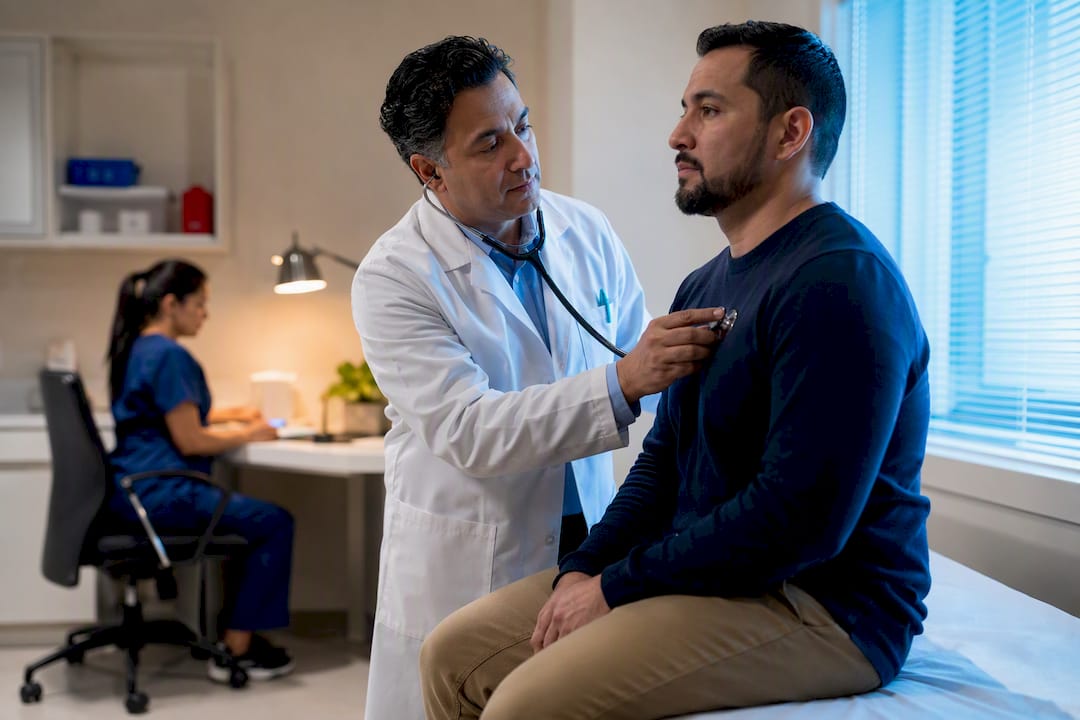
- What Actually Happens During the Exam?
- How Long Until Your Sealed I-693 Is Ready?
- The Mistakes That Cause the Most Delays
- Why a Specialized Civil Surgeon Clinic Makes a Difference
- Our Take: What This Process Actually Requires
- Get Your Sealed I-693 Without the Guesswork
- Where to Verify the Official Rules
- Sources
- FAQ
What Is Form I-693, and Who Has to Submit It?
Form I-693, the Report of Immigration Medical Examination and Vaccination Record, documents whether you meet the medical admissibility standards under the Immigration and Nationality Act. Civil surgeons follow CDC technical instructions to check for communicable diseases of public health significance, confirm vaccination status, and screen for certain mental health or substance-related conditions that could affect your case.
Not every applicant needs the same version of the form. Coverage generally breaks down like this:
- Most I-485 filers submit the complete I-693, including the physical exam, labs, and vaccination review.
- Some refugees and asylees who already completed an overseas medical exam may only need the vaccination supplement, not a full repeat exam.
- Certain adjustment categories have narrower medical requirements, so it’s worth confirming your category before booking.
Once your civil surgeon finishes and seals your form, USCIS instructs you to submit it with Form I-485 in most cases rather than holding onto it indefinitely. Your job at that point is simple: keep the envelope sealed and get it into the right hands.
When Should You Schedule Your Civil Surgeon Exam?
Timing matters more than most applicants realize. USCIS has tightened expectations around submitting I-693 alongside your I-485, which means waiting until a request for evidence lands is a risky strategy. Scheduling too early carries its own problem: if your case stalls and the form’s validity period tied to that specific application expires, USCIS policy may require a brand-new exam before you can file again.
A practical sequence looks like this:
- Confirm whether your filing strategy requires I-693 submitted with I-485 or whether it can follow later.
- Book your exam with enough runway to handle labs, a possible chest X-ray, or a multi-dose vaccine series.
- Build in a buffer of at least a few weeks before your filing deadline or interview date, especially if your vaccination records are incomplete.
Pro Tip: If you’re missing vaccination records entirely, don’t wait until the week before your appointment to track them down. Titers and catch-up doses can add days to your timeline, and a walk-in exam won’t fix a vaccine series that needs weeks between doses.
Clinics that run their own labs on-site avoid the biggest bottleneck: waiting on an outside lab to return results before the civil surgeon can sign off.
What Should You Bring to Your Appointment?
Show up prepared, and your exam moves fast. Show up without the right paperwork, and you may need a second visit. Bring these items:
- A valid government-issued photo ID, such as a driver’s license, state ID, or passport.
- Your I-485 receipt notice or interview notice, if you have one.
- Original vaccination records, not photocopies your pediatrician mailed you in 2003 that you can’t quite read anymore.
- Records from any prior immigration medical exam, especially if a previous civil surgeon started but didn’t finish your case.
- A list of current medications and any relevant medical history, particularly for chronic conditions or past tuberculosis treatment.
One detail trips people up constantly: Form I-693 has a section (Part 1) you fill out yourself, but you should not sign it until the civil surgeon tells you to sign in their presence. USCIS form instructions require identity verification at the time of signature, so an early signature can force a redo. A quick I-693 checklist before you leave the house solves most of this.
What Actually Happens During the Exam?
The appointment itself follows a predictable structure, even though the pace depends on what your history turns up. Expect the civil surgeon to move through these stages:
- A review of your medical and vaccination history, followed by a focused physical exam.
- Blood work, which typically includes syphilis and, for applicants age 15 and older, HIV testing.
- An IGRA blood test for tuberculosis screening, replacing the older skin test at most clinics.
- A chest X-ray if your TB test comes back positive or your history calls for it.
- Vaccine administration on the spot for any doses you’re missing, based on CDC-required immunizations.
Here’s where turnaround time gets decided: clinics that run labs and X-ray capability on-site typically finish and seal I-693 within a few business days, while clinics that send tests to an outside lab can add a week or more waiting on results. A positive TB screen is the single most common reason a form doesn’t get signed the same week. If that happens, the civil surgeon holds your I-693 open until your chest X-ray or treatment documentation comes back, which is sometimes called a Class A or Class B classification depending on severity. That pause is normal, not a red flag on your case, but it does mean you should not schedule your exam the week before your interview and assume everything wraps up cleanly.
How Long Until Your Sealed I-693 Is Ready?
Turnaround depends heavily on whether your clinic can process labs in-house. A standard timeline runs about 2 to 3 business days for a straightforward case with on-site labs, and some clinics offer expedited processing that shortens that further. Clinics without in-house testing often quote a week or longer, because they’re waiting on a third party.
A few things to keep in mind about validity once your form is sealed:
- USCIS ties Form I-693 to the specific benefit application it was submitted with; if you withdraw that application or it gets denied, a new I-693 is generally required for any future filing.
- If USCIS sends a request for additional evidence or asks for a fresh original, respond with the documentation your civil surgeon’s office kept on file, and contact the clinic that performed your exam rather than starting from scratch elsewhere.
- Ask for your own copy of the results before the envelope is sealed. It won’t help USCIS, but it will help you if a question comes up later.
The Mistakes That Cause the Most Delays
Almost every I-693 problem USCIS flags traces back to one of a few avoidable errors:
- Opening the sealed envelope. USCIS will not accept a tampered or opened I-693, no matter how good your intentions were.
- Showing up with incomplete vaccination records. Missing documentation often means extra doses or blood titers on the spot, which adds time you may not have.
- Skipping the signature and paperwork check. Before your civil surgeon seals the form, confirm your name, A-number, and the civil surgeon’s signature and civil surgeon identification number appear correctly on every page.
Applicants who come to a specialist clinic after a botched exam elsewhere usually cite one of these three problems as the reason they had to start over.
Why a Specialized Civil Surgeon Clinic Makes a Difference
A clinic that only performs immigration medical exams handles a narrower job than a general urgent care office, and that focus shows up in fewer errors. Specialist practices typically offer:
- On-site labs and vaccine administration, so results don’t depend on a third-party turnaround.
- Staff who complete I-693 forms daily rather than occasionally, which cuts down on the paperwork mistakes that trigger RFEs.
- Straightforward pricing that tells you what’s included before you sit down for the exam.
Some specialized clinics have focused exclusively on Form I-693 exams for many years, offering flat-package pricing, standard 3-day processing, and expedited options for tighter deadlines.
Pro Tip: When comparing clinics, ask directly whether labs are processed on-site or sent out. That one question tells you more about your realistic turnaround than anything on a clinic’s homepage.
Our Take: What This Process Actually Requires
The conventional advice on I-693 timing treats it like a simple checkbox: book an exam, get the form, submit it. That undersells how much the details matter. The applicants who run into trouble aren’t usually the ones with complicated medical histories. They’re the ones who assumed vaccination records would show up quickly, or scheduled their exam so close to a deadline that a single positive TB screen threw off the entire filing.
Our take, based on how USCIS has tightened its stance on I-693 validity and submission timing: treat the exam as an early-stage task, not a last-minute errand. Gather vaccination records before you book, not after. Ask your clinic directly about on-site lab capability, because that single factor predicts your turnaround more than anything else. And never assume a form completed months ago is still good if your case status has changed in the meantime. The paperwork rules are less forgiving than they used to be, and preparation is the only real defense against losing weeks to a redo.
— ImmigrationMedicalExams Medical Team
Get Your Sealed I-693 Without the Guesswork
ImmigrationMedicalExams.com has focused exclusively on Form I-693 exams since 2007, which means no primary care visits, no urgent care overlap, just civil surgeon exams done correctly the first time.

The clinic runs on-site labs and vaccine administration, reviews your records against CDC requirements, and completes your sealed I-693 through a straightforward flat-package pricing model built to avoid surprise charges. Standard processing takes about 3 business days, with a 2-day expedited option when your filing or interview date is close. Applicants who ran into delays, missing vaccine documentation, or errors from a prior exam elsewhere often come here specifically to get it corrected and finished properly. Appointments can be booked online 24/7, so you can check availability and schedule your civil surgeon exam whenever it fits your schedule, not just during office hours.
Where to Verify the Official Rules
A few official sources cover the technical and legal details behind everything above, and they’re worth bookmarking:
- Form I-693 instructions: The detailed instructions covering signature requirements and how to complete each part.
- Find a civil surgeon: USCIS’s tool for confirming a provider’s designation before you book.
- CDC technical instructions: The clinical standards civil surgeons follow for vaccines, testing, and disease screening.
Checking these directly, rather than relying on secondhand summaries, is the safest way to confirm requirements before your appointment.
FAQ
Do I need a medical exam before my green card interview?
Most I-485 applicants need a completed, sealed Form I-693 from a civil surgeon, and USCIS often requires it to be submitted with your I-485 rather than saved for the interview itself.
Can I open the sealed I-693 envelope to check it?
No. USCIS will not accept a tampered or opened envelope, so leave it sealed and submit it exactly as your civil surgeon provided it.
How long does it take to get a completed I-693?
Clinics with on-site labs commonly finish and seal the form in about 2 to 3 business days, with some offering a 2-day expedited option; clinics relying on outside labs often take longer.
What happens if my I-693 expires before I use it?
Under updated USCIS policy, a Form I-693 is generally valid only for the specific application it was submitted with, so a denied or withdrawn case usually means a new exam for any future filing.
How much does the civil surgeon exam cost?
USCIS does not set or regulate civil surgeon fees, and costs vary by provider, which is why comparing flat-package pricing before booking is worth the extra few minutes.