One Dose Often Clears I-693 Vaccination for Green Card Applicants
There’s no separate “vaccination supplement” form. What people call the I-693 vaccination supplement is actually Part 10 of Form I-693 itself, the section where your civil surgeon records your immunization status. The civil surgeon follows CDC Technical Instructions and can administer any missing, age-appropriate vaccine on the spot, often signing off after a single dose. Bring dated written records to your appointment, or expect to leave with a vaccine in your arm instead.
TL;DR:
- Bringing complete, dated vaccination records significantly reduces delays, as undocumented or partially documented vaccines often cause USCIS form rejection.
- A single age-appropriate vaccine dose given during the exam generally suffices; completing the series can be deferred to your regular healthcare provider later.
- Civil surgeons follow CDC guidelines for specific vaccines, including MMR, polio, Tdap, hepatitis B, and varicella, with additional vaccines depending on age and immunity status.
- Documentation must include full dates; self-reported history or vague records are usually rejected, and foreign vaccine records require certified translations for acceptance.
- Vaccinations are administered during the same visit as the exam and lab testing, making separate appointments unnecessary and streamlining the process.
Table of Contents
- What Is the I-693 Vaccination Supplement, Exactly?
- Which Vaccines Does Form I-693 Actually Require?
- How Does the Civil Surgeon Decide What You Need?
- Handling Overseas Records and What Counts as Proof
- Waivers and Contraindications: When a Vaccine Isn’t Required
- What to Expect Timeline Wise at Your Appointment
- Avoiding the Mistakes That Delay I-693 Approval
- How ImmigrationMedicalExams Handles the Vaccination Portion
- Why “Vaccination Supplement” Is the Wrong Way to Think About This
- Ready to Complete Your I-693 Vaccination Review?
- Sources
- FAQ
What Is the I-693 Vaccination Supplement, Exactly?
The term “I-693 vaccination supplement” gets thrown around online, but no such standalone document exists. USCIS built vaccination review directly into Form I-693, and Part 10 is where a civil surgeon lists every disease you’re protected against and how that protection was established, whether through documented vaccination, blood titers, or natural immunity. The confusion is understandable. Applicants often hear “vaccination supplement” from older forums or secondhand advice, but current USCIS guidance treats it as one continuous form with a dedicated vaccination section, not a separate filing.
That distinction matters for planning your appointment. You are not scheduling two visits, one for the physical exam and another for vaccines. A single civil surgeon visit typically covers the exam, lab work, and vaccination review together, which is why ImmigrationMedicalExams’ step-by-step exam guide walks through all three in sequence rather than as separate appointments.
Which Vaccines Does Form I-693 Actually Require?
The required list comes from CDC’s Technical Instructions for Civil Surgeons, and it’s narrower than the full adult immunization schedule most primary care doctors work from. The vaccines civil surgeons check for, based on your age and medical history, generally include:
- Measles, mumps, and rubella (MMR)
- Polio (IPV)
- Tetanus, diphtheria, and pertussis (Tdap or Td)
- Hepatitis B
- Varicella (chickenpox)
- Seasonal influenza, during flu season
- Haemophilus influenzae type b (Hib), for applicants in the applicable age range
- Rotavirus, for applicants in the applicable age range
- Pneumococcal disease, for applicants in the applicable age range
- Meningococcal disease, for applicants in the applicable age range
Not every vaccine ACIP recommends for the general U.S. population makes this list. CDC restricts the immigration requirement to vaccines that are age-appropriate for you specifically and that address diseases with real outbreak or elimination significance in the United States. A civil surgeon’s job is compliance with immigration health standards, not running a general wellness visit, so the acceptance rules differ from what you’d get at a routine pediatrician or internal medicine appointment.
COVID-19 deserves a specific note because applicants ask about it constantly. It is not currently on the mandatory list the way MMR or Tdap are, but if you have documentation of COVID-19 vaccination, bring it. Some civil surgeons will note it voluntarily, and having the record on hand costs you nothing and can only help. If you’re unsure which vaccines apply to your specific age group, the clinic’s breakdown of current USCIS vaccination requirements covers the age-based nuances in more detail.
How Does the Civil Surgeon Decide What You Need?
The process starts with your paperwork, not your memory. A civil surgeon needs written records showing exact vaccination dates, and telling the doctor “I think I got that shot as a kid” does not count as documentation. Self-reported history, without dates on paper, gets treated as no record at all.
For certain diseases, particularly varicella, a blood titer can substitute for a vaccination record if you’re not sure you ever had chickenpox or the vaccine. The civil surgeon can order that lab test, and a positive result showing immunity closes that requirement without a shot. ImmigrationMedicalExams’ guide to varicella immunity explains which lab results qualify and how titer thresholds work in more detail.
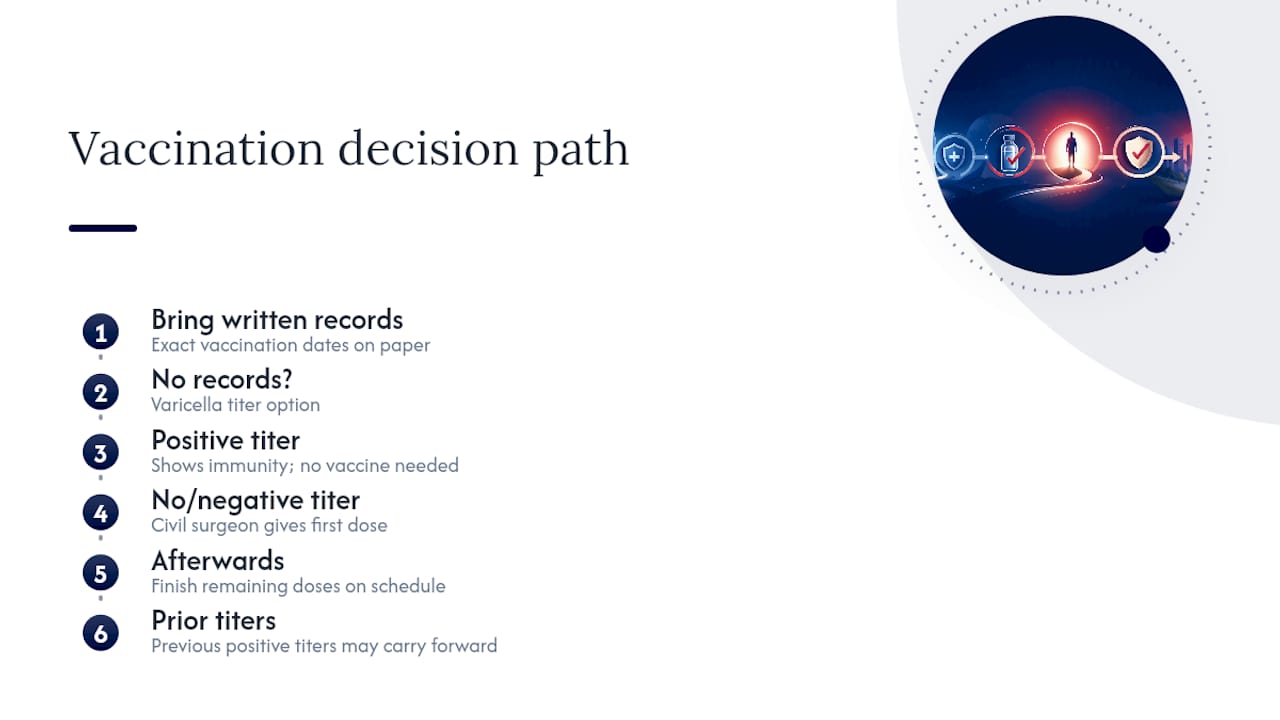
Here’s the part that surprises most applicants: you usually don’t need to complete a full vaccine series before your civil surgeon will sign Form I-693. If you’re missing a dose, the civil surgeon can give you the first age-appropriate dose at the exam, and that single dose is generally enough to satisfy the vaccination component for signing purposes. You finish the remaining doses later with your regular doctor or a public health clinic, on the standard series schedule.
Pro Tip: If you’ve had a previous I-693 exam with lab-confirmed titers, bring that paperwork. Civil surgeon policy allows prior positive titers to carry forward on repeat exams, which can save you a second blood draw and a lab fee.
Handling Overseas Records and What Counts as Proof
Written records only count when they carry complete dates. Acceptable documentation includes official vaccination cards, medical chart entries signed by a provider, and printouts from state immunization registries. A vaccine listed with no date next to it is functionally the same as no record for civil surgeon purposes.
If you had a medical exam abroad through a State Department panel physician before immigrating, those overseas vaccination records don’t automatically transfer to your I-693 review. U.S. civil surgeons generally still need to see the original documentation with dates. If the panel physician’s paperwork is complete and dated, it typically holds up; if it’s vague, missing entries, or was never given to you as a written record, expect the civil surgeon to treat those vaccines as undocumented and start over.
If your records are incomplete or missing entirely, take these steps before your appointment:
- Contact your childhood pediatrician or family doctor and request certified copies of your immunization history.
- Check your state’s immunization information system or registry, since many states retain electronic vaccination records going back decades.
- If records exist only in a foreign language, get a certified translation. A civil surgeon cannot accept a document they can’t read and verify.
- If no records exist anywhere, plan on being revaccinated rather than trying to reconstruct history from memory.
Waivers and Contraindications: When a Vaccine Isn’t Required
Not every applicant needs every vaccine on the list; and Form I-693 has a formal mechanism for that. HHS defines specific criteria under which a civil surgeon can determine a vaccine is “not medically appropriate” and grant what’s known as a blanket waiver. The recognized reasons are:
- The vaccine is not age-appropriate for the applicant.
- Administering it would be medically unsafe, based on a documented health condition.
- There isn’t enough time before the exam to complete the full series appropriately.
- Seasonal influenza vaccine is not locally available at the time of the exam.
- The COVID-19 vaccine is not routinely available in the civil surgeon’s area.
When a waiver applies, the civil surgeon must write the specific reason in the remarks section of Form I-693, not just check a box. USCIS reviewers expect that documentation to be specific and defensible.
Separately, applicants can request a waiver based on religious or moral objections to vaccination in general. That’s a different process filed with USCIS directly, and it requires demonstrating a consistent, sincerely held objection rather than a preference against one particular vaccine. These waivers are decided case by case, and there’s real risk: if USCIS denies the request, the applicant is back to needing the vaccines with no guaranteed path to reconsideration before a decision on the underlying case.
What to Expect Timeline Wise at Your Appointment
Start gathering records two to four weeks before you plan to schedule your civil surgeon visit. That gives you time to track down old immunization cards, request certified copies from former providers, and get translations done if you need them, rather than scrambling the week before.
- Collect every available vaccination record, including childhood cards, school immunization forms, and any documents from previous medical exams.
- Schedule your civil surgeon appointment once you have what you can find, rather than waiting until your records are perfect.
- Bring originals plus a copy of everything, along with your passport or government ID.
- Expect the civil surgeon to administer any missing first doses on-site if your record has gaps.
Seasonal influenza only applies as a requirement roughly between September 1 and March 31, so the calendar genuinely affects what’s checked at your specific visit. Availability of both flu and COVID-19 vaccines locally can also affect what boxes get marked on Part 10. If your vaccination chart comes back incomplete, USCIS may return Form I-693 or ask for corrective action, which adds weeks to your case. That’s the single biggest reason to get this section right the first time.
Avoiding the Mistakes That Delay I-693 Approval
The vaccination section causes more rejected or returned I-693 forms than almost any other part of the exam, and the reasons are consistently the same across cases. Missing dates on old records top the list, followed by applicants who show up expecting verbal history to count, translated documents that weren’t certified, and vaccination chart rows left blank instead of marked with a reason or a waiver code.
Bring the following to your appointment:
- Original vaccination records with complete month/day/year entries
- A copy of any prior Form I-693, if you’ve had a previous immigration medical exam
- Passport or government-issued photo ID
- A written list of vaccines you believe you’ve had, with approximate dates, even if you can’t find the original card
- Certified translations for any non-English documents
If a required vaccine simply isn’t available locally, that’s not automatically your problem to solve. The civil surgeon should document the unavailability directly on the form rather than leaving the row blank or guessing.
| Common mistake | Why it causes delays | Fix before your appointment |
|---|---|---|
| Undated vaccine records | Civil surgeon can’t verify timing of doses | Request certified copies with full dates |
| Verbal vaccine history only | Not accepted as documentation | Track down written records or plan on revaccination |
| Uncertified foreign-language records | Civil surgeon cannot legally verify content | Get certified translation before the visit |
| Incomplete chart rows | USCIS may return the form for correction | Confirm every row is marked, waived, or documented |
How ImmigrationMedicalExams Handles the Vaccination Portion
ImmigrationMedicalExams has specialized exclusively in immigration medical exams and Form I-693 since 2007, with no primary care or urgent care visits diluting the focus. That specialization matters most in Part 10, where errors and incomplete entries cause the majority of returned forms.
The clinic runs on a flat-package pricing model, with standard I-693 processing in approximately 3 days and a 2-day expedited option for applicants working against a deadline. Vaccine administration and lab-based titer testing happen on-site during the same visit as your physical exam, so you’re not juggling separate appointments across town. The team frequently assists applicants who have experienced delays, errors, or incomplete vaccination documentation from prior exams, helping to address issues that could cause delays in USCIS processing.
If you’re preparing for a visit, bring every immunization record you can locate, your government ID, and any prior I-693 paperwork. Appointments can be booked online at any hour through the clinic’s 24/7 online scheduling system.
Why “Vaccination Supplement” Is the Wrong Way to Think About This
Calling it a “supplement” makes applicants treat vaccination as an optional add-on, something to handle separately or skip if it feels inconvenient. That framing is backwards. Part 10 carries the same weight as the physical exam and lab work; USCIS can return the entire I-693 over an incomplete vaccination chart just as easily as over a missed lab result.
The conventional advice online tends to overcomplicate this. Applicants read forum threads suggesting they need every vaccine fully completed before the exam, when the actual rule is far more forgiving: one age-appropriate dose at the visit generally satisfies the requirement, with the rest of the series finished on your own timeline afterward. That single fact would save a lot of people unnecessary stress and unnecessary pre-appointment vaccine shopping.
If there’s one thing to prioritize, it’s paperwork over memory. Spend your prep time tracking down dated records, not trying to recall which shots you got as a kid. A civil surgeon working from solid documentation moves faster than one starting from scratch, and that speed is entirely within your control before you ever sit down for the exam.
— ImmigrationMedicalExams Medical Team
Ready to Complete Your I-693 Vaccination Review?
Scheduling separate visits for vaccines and the physical exam can be time-consuming. Our clinic handles the exam, lab testing, and vaccination review together in one visit, with transparent flat-package pricing.

Standard processing typically takes a few days; expedited options may be available if your filing timeline is tight. Bring whatever vaccination records you have, even incomplete ones. Missing a dose isn’t a dealbreaker; the civil surgeon can administer it on-site and complete Part 10 the same day. Appointments are available 24/7 through online scheduling, and the clinic frequently helps applicants fix documentation errors left over from exams performed elsewhere. Book your visit and bring your records; that’s the whole process.
This article is general information, not a substitute for advice from a qualified doctor. Consult a qualified healthcare professional about your own circumstances before acting on anything here.
Sources
- Vaccination | Technical Instructions for Civil Surgeons
- I-693 | Report of Immigration Medical Examination and Vaccination Record
FAQ
What Vaccinations Are Required for Form I-693?
Required vaccines include MMR, polio, Tdap or Td, hepatitis B, varicella, seasonal influenza, and age-specific vaccines like Hib, rotavirus, pneumococcal, and meningococcal, based on CDC Technical Instructions. Exactly which ones apply to you depends on your age and documented immunity.
What Are the New Rules for Form I-693?
Since December 2, 2024, applicants filing Form I-485 must include Form I-693 or a partial version covering vaccinations at the time of filing, according to USCIS. The vaccination chart must have at least one entry in every vaccine row, whether that’s a date, a titer result, or a documented waiver reason.
What Vaccines Are Required for Green Card Applications?
The list is set by CDC’s Technical Instructions and centers on MMR, polio, Tdap, hepatitis B, and varicella, with additional vaccines required depending on your age group and health history. It is not identical to the general adult immunization schedule your regular doctor might recommend.
Where Can I Get Immigration Vaccines for My Green Card?
Your civil surgeon can administer needed vaccines directly during your I-693 exam appointment, which is the most efficient option since documentation happens on the spot. You can also get vaccinated at a local health department or pharmacy beforehand, as long as you bring back written proof with complete dates.
Can I Use a Titer Instead of a Vaccination Record?
Yes, for certain diseases like varicella, a positive blood titer showing immunity can substitute for a documented vaccine history, and your civil surgeon can order that test if needed. Prior positive titers from an earlier immigration exam may also carry forward on a repeat visit.