K-3 spouse visa holders adjusting status need Form I-693, the medical exam a USCIS-designated civil surgeon completes inside the United States to confirm you meet vaccination and health requirements before your green card is approved. This exam is separate from the overseas medical exam you completed for your K-3 visa interview, and mixing up the two is the single biggest cause of delay for this group.
- K-3 spouse visa holders adjusting status need a new Form I-693 from a US civil surgeon; the overseas K-3 visa exam does not count.
- Vaccination records from your home country still apply, but a civil surgeon must verify and translate them for Form I-693.
- Time your exam close to your Form I-485 filing since Form I-693 has a limited validity window.
- ImmigrationMedicalExams.com in Costa Mesa completes Form I-693 in 3 business days standard, 2 days expedited when scheduling and lab results allow.
Why Form I-693 matters for K-3 spouse visa holders
You entered the United States on a K-3 visa after your overseas medical exam with a panel physician. That exam got you through your visa interview, but it does not transfer to your adjustment of status case. USCIS requires a fresh Form I-693 from a civil surgeon licensed to practice in the U.S. as part of your Form I-485 packet.
This catches K-3 spouses off guard more often than other applicants because they assume one medical exam should cover the whole process. It doesn't. Your Form I-485 will sit incomplete, or draw a Request for Evidence, if you file without a valid Form I-693 attached.
Update your understanding of which exam counts
- The K-3 visa medical exam happened overseas with a panel physician approved by the U.S. embassy or consulate.
- Form I-693 is a separate exam performed by a civil surgeon inside the United States, tied specifically to your Form I-485 adjustment of status application.
- Your overseas exam results, vaccination history, and any treatment records are still useful as documentation, but they don't substitute for the civil surgeon's signed Form I-693.
- If your overseas exam flagged a health condition, bring that documentation to your civil surgeon visit so it can be addressed correctly on Form I-693.
Gather your vaccination records before you schedule
Most delays for K-3 spouses trace back to incomplete vaccination documentation, not the physical exam itself.
- Collect any vaccination cards or immunization records from your home country, translated if not already in English.
- Bring your K-3 visa medical exam paperwork even though it won't replace Form I-693 — it helps the civil surgeon confirm what you've already received.
- List any vaccines given in the U.S. since your K-3 entry, including at pharmacies or urgent care visits.
- If records are missing or incomplete, expect the civil surgeon to recommend blood titers or repeat vaccinations to satisfy USCIS vaccination requirements rather than guess at your history.
Confirm your Form I-485 timeline before booking the exam
Form I-693 doesn't stay valid forever, and filing timing matters more for K-3 spouses because your case often moves through multiple steps in sequence.
- Check whether your Form I-485 has already been filed or is about to be filed.
- Review Form I-693 validity, reuse, and expiration rules so your exam doesn't lapse before your case is decided.
- If you haven't filed Form I-485 yet, avoid scheduling your civil surgeon exam too far in advance.
- If biometrics or an interview is already scheduled, work backward from that date; see how to time your I-693 exam before your biometrics appointment.
Schedule your exam with a USCIS-designated civil surgeon
Not every doctor can sign Form I-693. Only civil surgeons formally designated by USCIS have that authority, and a general practitioner may not have handled a K-3 adjustment case before.
- Confirm the provider is a USCIS-designated civil surgeon, not simply a family doctor.
- Ask whether the clinic has experience with K-3 spouse adjustment cases specifically, since the paperwork sequence differs from a family-based petition filed from abroad.
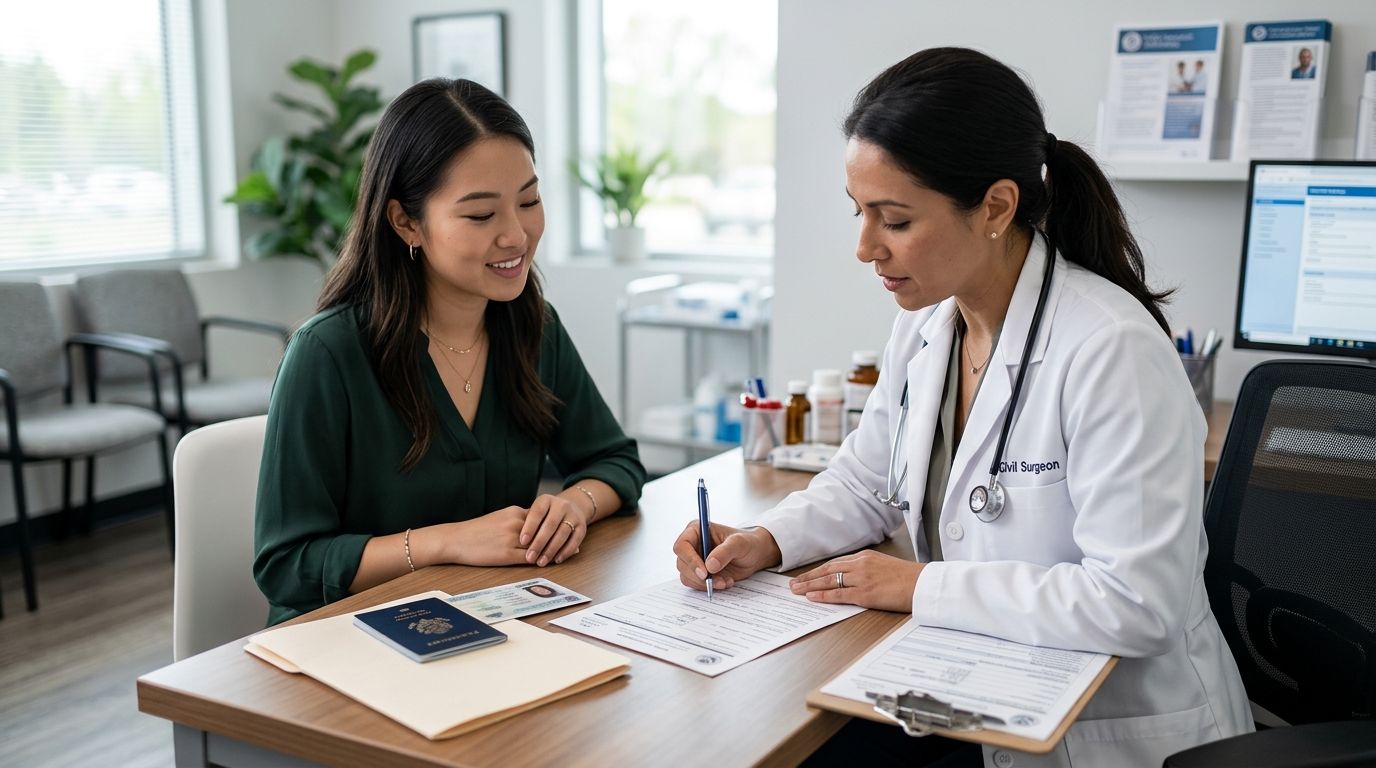
- Bring your passport, K-3 visa stamp, Form I-797 approval notices, marriage certificate, and any prior medical records to the appointment.
- A dedicated immigration medical exam clinic, rather than an urgent-care center handling exams as a side service, generally moves faster through documentation review because it's the only thing the practice does.
This is where ImmigrationMedicalExams.com in Costa Mesa fits for Orange County, Los Angeles, Riverside, San Diego, and San Bernardino county residents: the clinic is staffed exclusively by USCIS-designated civil surgeons and has focused only on Form I-693 exams since 2007.
Complete required testing and vaccinations in one visit
Once you're at the civil surgeon appointment, expect the following pieces of the exam:
- A physical exam covering vision, hearing, and general health screening.
- Tuberculosis blood or skin testing, with a chest X-ray if results warrant it.
- Blood and urine testing as required for your age group.
- Any vaccinations still missing from your record, administered on-site when appropriate.
- Vaccination record review against current CDC guidance for immigration medical exams.
Submit the sealed Form I-693 correctly with your Form I-485 packet
The civil surgeon completes Form I-693 and seals it — you should never open that envelope.
- Confirm whether your case requires mailing the sealed form with your Form I-485 packet or bringing it to an interview, and review how sealed Form I-693 packets are filed for current guidance.
- Keep the sealed envelope intact and unopened until USCIS receives it.
- If your Form I-485 is time-sensitive, ask about expedited Form I-693 turnaround — a 2-business-day option exists at some clinics when lab results and vaccination records allow it.
- Standard completion runs 3 business days; expedited completion depends on lab turnaround and documentation, not just scheduling.
Where K-3 spouses can complete the exam
| Option | Best for | Key limitation |
|---|---|---|
| Dedicated immigration medical exam clinic | K-3 spouses who want civil surgeon exam, TB testing, and vaccinations coordinated in one visit | Fewer locations than general clinics; may require an appointment rather than walk-in |
| General primary care physician with civil surgeon designation | Spouses with an existing doctor who happens to hold the designation | Immigration exams are a small part of their practice; documentation errors are more common |
| Urgent care center offering civil surgeon services | Spouses needing evening or weekend availability | Staff may handle immigration exams infrequently, increasing risk of incomplete Form I-693 |
| Community health clinic | Spouses without insurance seeking lower-cost options | Longer wait times; TB testing and vaccine coordination may require separate visits |
Verdict: A clinic that performs Form I-693 exams as its sole focus, like ImmigrationMedicalExams.com, generally reduces the risk of a Request for Evidence compared to a general practice handling immigration exams occasionally. Buy.
Common mistakes K-3 spouses make with Form I-693
- Assuming the overseas K-3 visa exam counts for adjustment of status. It doesn't. Form I-693 must come from a civil surgeon inside the U.S.
- Scheduling the exam too early, before Form I-485 is filed, then watching the validity window run out before USCIS makes a decision.
- Arriving without vaccination records, forcing the civil surgeon to order titers or repeat vaccines that could have been avoided with better documentation.
- Opening the sealed envelope after the exam, which can require a repeat visit to reseal or reissue the form.
- Forgetting spouse-specific paperwork like the Form I-797 approval notice or marriage certificate, which some civil surgeons ask for to confirm the correct case type.
FAQ
Does my K-3 visa medical exam count for Form I-693?
No. Your K-3 visa exam was performed overseas by a panel physician for your visa interview. Form I-693 requires a separate exam by a USCIS-designated civil surgeon inside the United States as part of your Form I-485 adjustment of status packet.
How soon after entering on a K-3 visa should I schedule my Form I-693 exam?
Schedule it close to when you file Form I-485, since Form I-693 has a limited validity period. Scheduling too early risks the exam expiring before USCIS reviews your case.
What documents should a K-3 spouse bring to the civil surgeon appointment?
Bring your passport, K-3 visa stamp, Form I-797 approval notices, marriage certificate, and any vaccination or medical records from your home country. These help the civil surgeon complete Form I-693 accurately on the first visit.
Can a K-3 spouse get an expedited Form I-693 exam?
Some clinics offer a 2-business-day expedited option in addition to the standard 3-business-day completion, depending on scheduling, lab results, and vaccination status. Ask the clinic directly about current availability.
What happens if my vaccination records from my home country are incomplete?
The civil surgeon may order blood titers to check immunity or recommend repeat vaccinations to meet current CDC requirements for Form I-693. Bringing whatever records you have, even partial ones, speeds up this process.
Do I need a new Form I-693 if my K-3 status is renewed or extended?
Form I-693 validity is tied to when the civil surgeon signs it, not to your K-3 status directly. Check the current validity guidance so your form doesn't expire before your Form I-485 decision.
Should I open the sealed Form I-693 envelope before mailing it?
No. The civil surgeon seals Form I-693 for a reason, and USCIS expects to receive it unopened. Opening it can require a repeat visit to have it resealed correctly.
One last thing
K-3 spouses sometimes assume the sequence is exam first, filing second, when in practice the safer order is confirming your Form I-485 filing plan first, then booking the civil surgeon exam so Form I-693 doesn't expire while your case is pending. That single scheduling decision prevents more delays than any documentation issue.